
The apple: A familiar taste, a rich history
To celebrate Apple Day, we're taking a closer look at a fruit we all know and love, but whose value in our everyday diet we often underestimate.
The scent of apples takes many of us back to childhood, our grandmothers' kitchens and the first days of autumn. Yet their story began far from our orchards. Apples are believed to have been domesticated more than 4,000 years ago in Central Asia before making their way to Europe along the Silk Road. Today, there are over 7,500 varieties, offering a remarkable diversity of flavours, colours and aromas.
Montenegro has its own apple story, too. Researchers at the Biotechnical Faculty studied 14 traditional apple varieties in northern Montenegro, including Petrovača, Pazarka, Busuta, Zukvača and Ljutača. Having adapted to local growing conditions over generations, these varieties are a valuable part of the country's fruit-growing heritage. By preserving them, we also protect the wonderful diversity of flavours found in our local orchards.
From a nutritionist's perspective, the value of apples lies in their combination of fibre, water and beneficial plant compounds. One particularly important component is pectin, a type of soluble fibre that serves as food for beneficial gut bacteria. Fibre supports healthy digestion and helps us feel fuller for longer, while pectin may also have a modest beneficial effect on LDL, often referred to as "bad" cholesterol.
Apples also contain vitamin C, which contributes to normal immune function and helps protect cells from oxidative stress. Although apples aren't among the richest sources of this vitamin, they can still contribute to our daily intake. They also provide beneficial plant compounds such as quercetin, known for its antioxidant properties.
And what about the peel? It's worth keeping. Much of an apple's fibre and beneficial plant compounds can be found in its skin. Simply wash it thoroughly under running water and, if you enjoy it, eat it unpeeled. A whole apple is also a better source of fibre than clear apple juice, which loses most of its fibre during processing.
For a simple snack, pair an apple with a handful of walnuts or some plain yoghurt. If you're in the mood for something comforting, try baking it with cinnamon or adding it to your morning porridge.
The old saying about an apple a day might promise a little too much, but it carries a lovely reminder: looking after our health often begins with the simplest everyday food choices.
To celebrate Apple Day, we're also sharing a homemade treat with readers of the Herbal Montenegro blog. It's an easy way to enjoy the natural sweetness of apples and bring a little taste of autumn into your kitchen.
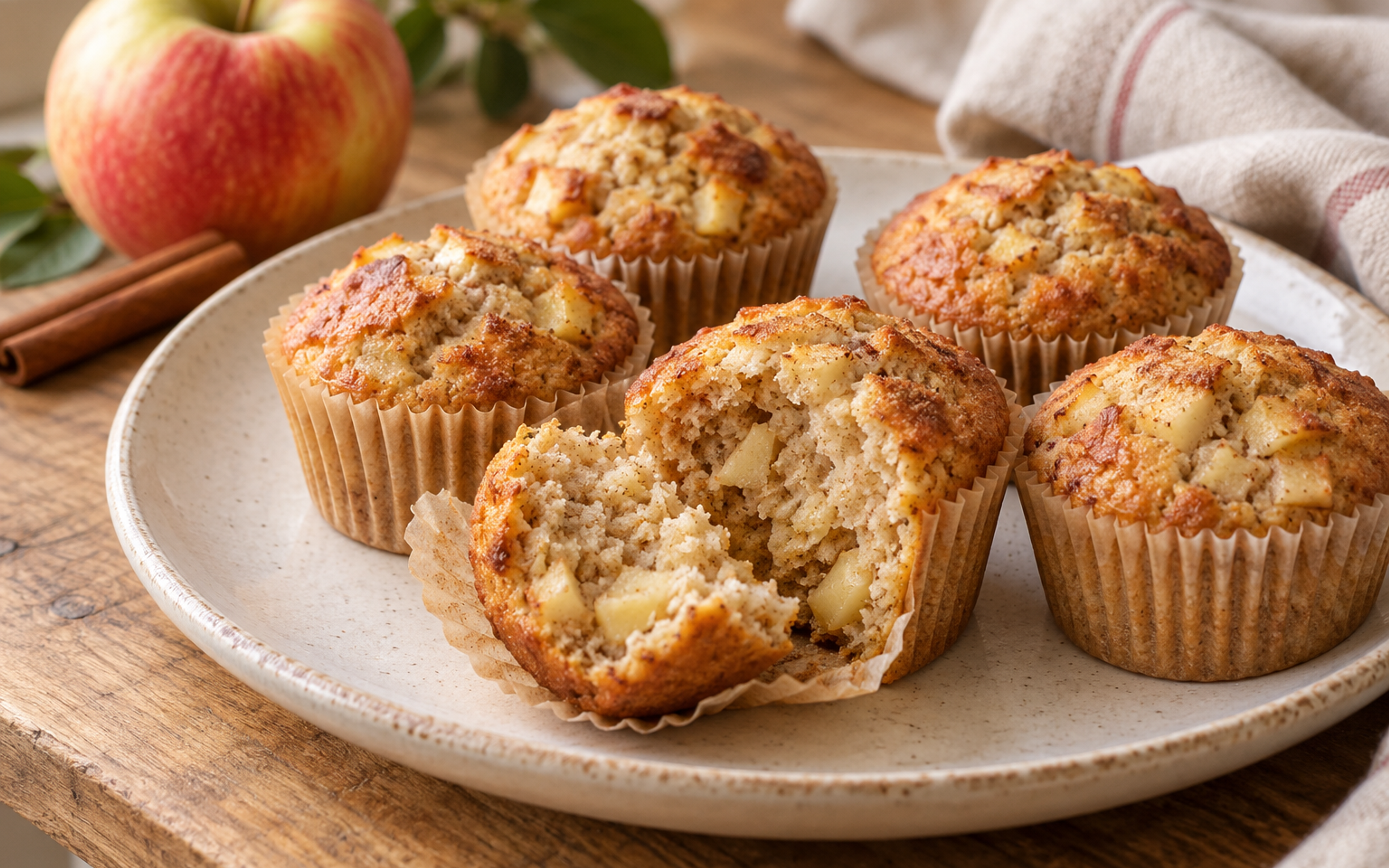
Apple and Cinnamon Muffins by Sibela
No added sugar, honey or syrup
Soft and fragrant, these muffins get their gentle sweetness naturally from apples.
Ingredients for 12 small muffins:
- 3 large eggs
- 240 ml homemade apple purée
- 60 ml melted coconut oil
- ½ cup fine coconut flour for baking
- ½ cup finely diced apple
- 1 teaspoon bicarbonate of soda (baking soda)
- 1½ teaspoons ground cinnamon
- 1 teaspoon vanilla extract
- A pinch of salt
Use a 240 ml measuring cup. Make sure to choose fine coconut flour intended for baking, rather than desiccated coconut, as they absorb liquid differently.
Homemade Apple Purée
Wash and peel 2–3 medium-sized sweet apples, remove the cores and seeds, then cut them into small cubes.
Place the apples in a small saucepan with 3–4 tablespoons of water. Cover and cook over a low heat for 10–15 minutes, until soft. Stir occasionally, adding a little more water if needed to prevent the apples from sticking or burning.
Mash with a fork or blend until you have a smooth, thick purée. If the mixture is too runny, simmer it uncovered for a few more minutes to allow any excess water to evaporate.
Leave to cool, then measure out 240 ml of apple purée. Prepare the diced apple for the muffins separately.
How to Make the Muffins
Preheat the oven to 190°C and line a 12-hole muffin tin with paper cases.
In one bowl, whisk together the eggs, cooled apple purée, melted and slightly cooled coconut oil, and vanilla extract.
In a separate bowl, combine the coconut flour, bicarbonate of soda, cinnamon and salt.
Add the dry ingredients to the wet mixture and stir until combined. Gently fold in the diced apple. The batter will be quite thick.
Divide the mixture evenly between the muffin cases and bake for 18–20 minutes, or until the tops are lightly golden.
To check if they're ready, insert a toothpick into the centre of a muffin. It should come out without any uncooked batter.
Allow the muffins to cool slightly in the tin before carefully removing them.
Enjoy the comforting aroma of apples and cinnamon — and a little sweet moment to yourself.