
Autumn for Immunity: Seasonal Foods and Immune Support Tea
This autumn, fill your basket with color, your jars with seasonal produce, and your cup with Immune Support tea.
Make the most of autumn with seasonal foods, simple healthy habits, and a warm cup of Immune Support tea as part of your daily ritual.

Make the most of what nature gives us at this time of year and enter the colder months ahead with good habits that support the normal function of the immune system.
Autumn brings cooler mornings, shorter days, and a return to warm cups of tea, but also an abundance of seasonal foods. Right now, markets and gardens are filled with produce worth including in our everyday diet — and preserving for winter.
Instead of waiting for the first cold days to start thinking about immunity, autumn is the ideal time to provide the body with a varied, nutrient-rich diet.
Autumn on Your Plate: Make the Most of the Season to Support Immunity
Apples – contain fiber and various plant polyphenols. They are excellent fresh, baked, or added to a warm bowl of oatmeal.
Pumpkin – its intense orange color reveals the presence of beta-carotene, which the body can convert into vitamin A. It is perfect for soups, purées, risottos, and healthier desserts.
Red peppers are an excellent dietary source of vitamin C. While they are in season, enjoy them fresh or roasted, and preserve some for the winter months.
Grapes – in addition to naturally occurring sugars, they contain various polyphenols and can be a great seasonal alternative to processed sweets.
Nuts – walnuts, hazelnuts, and almonds provide healthy fats, minerals, and vitamin E. A small handful paired with fruit makes a simple and practical snack.
Rose hips – a true autumn treasure. Known for their vitamin C content, they can be used to prepare tea, purées, and homemade spreads.
Preserve a Little Autumn in a Jar
Preserving seasonal produce for winter does not have to mean only ajvar or jams with large amounts of sugar. Peppers can be roasted and frozen, pumpkin can be cleaned, portioned, and frozen for soups, apples and plums can be dried, while rose hips can be turned into homemade purée or spread.
This way, even during the colder months, you will have foods on hand that were preserved while they were naturally in season.
Autumn Recipe: Creamy Pumpkin, Carrot and Ginger Soup
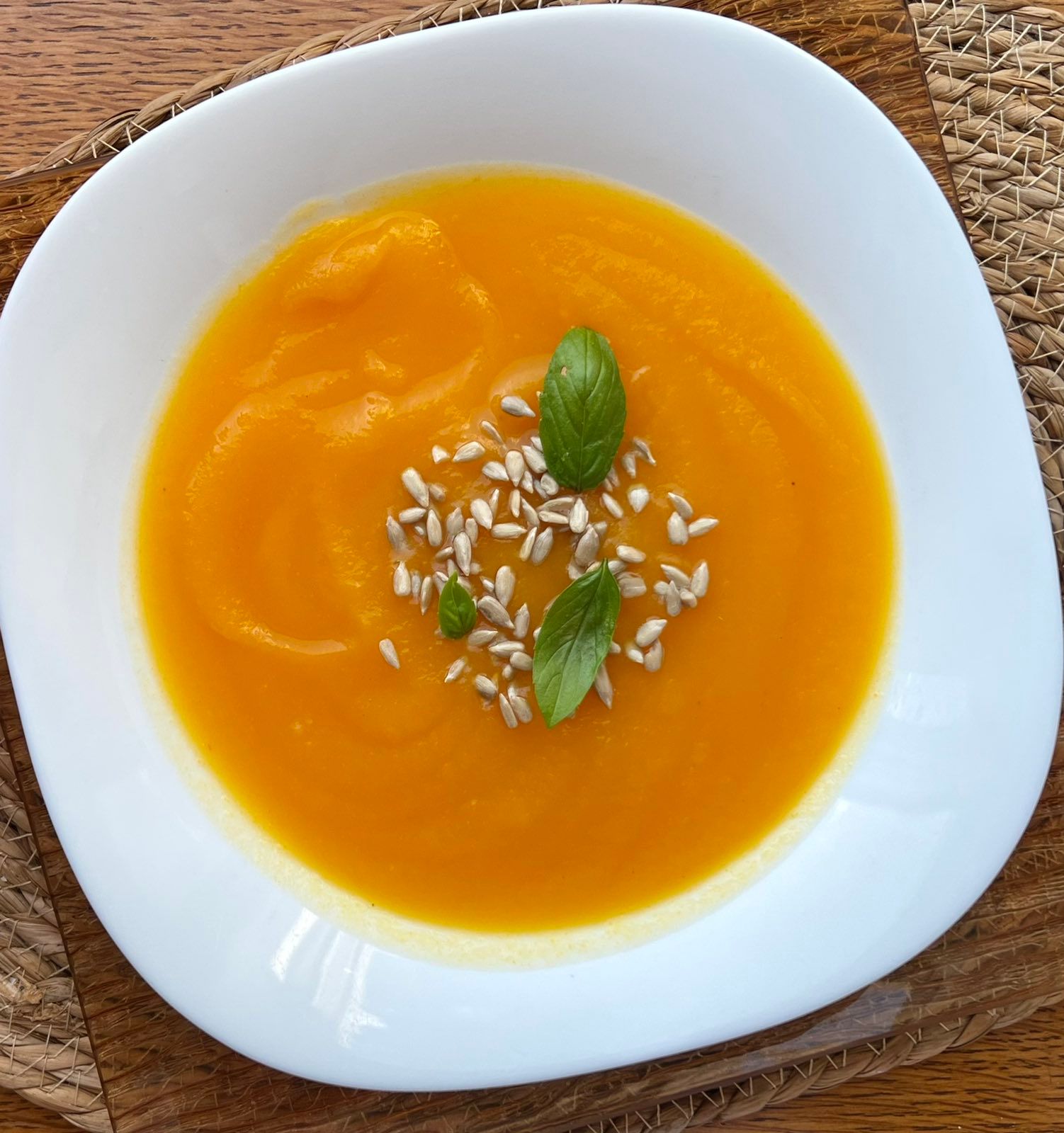
For 3–4 servings, you will need:
- 500 g pumpkin
- 2 carrots
- 1 small onion
- a small piece of fresh ginger
- 1 tablespoon olive oil
- 700 ml water or vegetable stock
- a little pepper and seasoning of your choice
Lightly sauté the onion in olive oil. Add the diced pumpkin and carrots, followed by the ginger and water or vegetable stock. Cook until the vegetables are soft, then blend everything into a smooth, creamy soup.
Serve with a few pumpkin seeds, several basil leaves, and a teaspoon of olive oil. The result is a warm, satisfying, nutrient-rich meal that tastes and smells like autumn.
Normal immune system function depends on the bigger picture: a balanced diet, enough sleep, regular physical activity, time spent outdoors, adequate fluid intake, and managing everyday stress.
So instead of searching for one “miracle” ingredient, use autumn as an opportunity to build small habits that you can maintain every day.
And one of the simplest can be a warm cup of herbal tea.
And We Recommend Our IMMUNE SUPPORT Tea - it is a herbal tea blend that brings together plants traditionally used in our region to support immunity.
Let Immune Support be not a substitute for a balanced diet, but part of your autumn ritual — a moment to slow down, warm up, and do something good for yourself.